
Local Law 157 Compliance Deadline
Local Law 157 Gas Detector Catch the Leak You Can’t See or Smell.
A Local Law 157 gas detector gives property owners and managers a fast, reliable way to detect natural gas across applicable residential properties. GasAlert is engineered for New York buildings and designed to support Local Law 157 compliance.
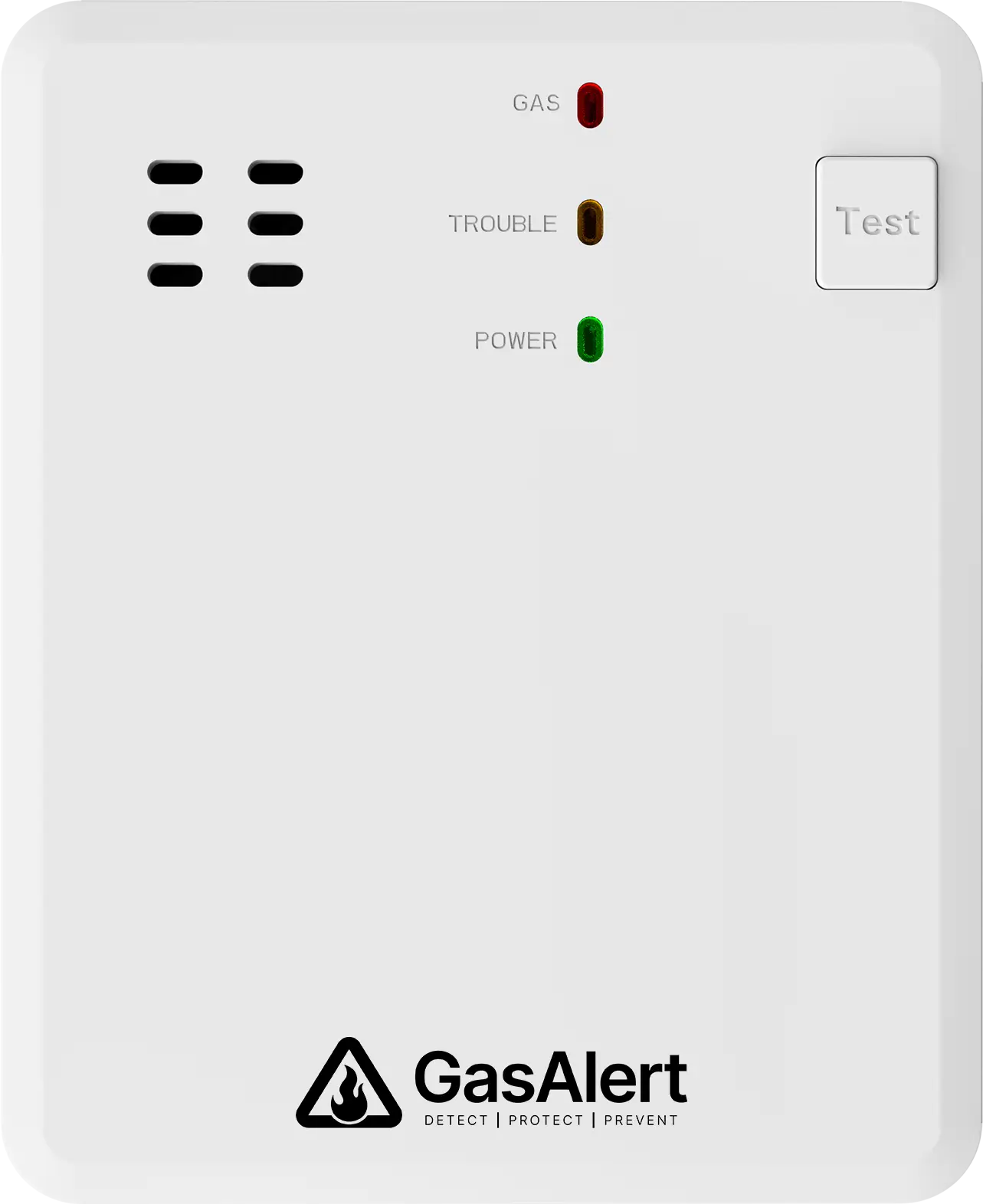
A Leak You Can't Smell Is Still a Leak.
Natural gas leaks aren’t always noticed immediately. Odour alone shouldn’t be relied upon as the only warning of a potential leak, which is why dedicated natural gas detection provides an important additional layer of protection.
Invisible by Design
Natural gas leaks may not always be noticed by smell alone. A dedicated natural gas alarm provides automatic detection and an additional warning for occupants.
Leaks Build Slowly
A natural gas leak may not always be noticed immediately, making automatic detection an important additional safeguard.
Every Minute Counts
Early detection gives residents and staff the time they need to ventilate a space and respond safely.
Shared Risk, Shared Responsibility
In multi-unit buildings, one undetected leak can put an entire property, and everyone in it, at risk.
What Local Law 157 Means for Your Building
New York City Local Law 157 requires natural gas detection in applicable residential occupancies. A Local Law 157 gas detector helps protect occupants by detecting natural gas that may otherwise go unseen or unnoticed. Local Law 102 of 2025 established January 1, 2027, as the compliance deadline, and the NYC Department of Buildings has confirmed that the required number of manufacturers offering qualifying battery-powered alarms is available.
The requirements cover applicable R-1, R-2 and R-3 residential occupancies, including many apartment buildings, hotels and one- and two-family homes. Whether an alarm is required generally depends on the presence of a fuel-gas-burning appliance. The legislation closes a long-standing gap in residential safety: smoke and carbon monoxide detectors have been required for years, but natural gas itself previously had no equivalent detection requirement.
Timeline
Local Law 157 is enacted, establishing natural gas detector requirements for covered NYC residential buildings.
The City Council passes an amendment (Int. 1281-2025) extending the installation deadline in response to device supply and cost concerns.
NYC DOB completes its determination of manufacturer availability and confirms that at least 4 distinct manufacturers of qualifying battery-powered natural gas alarms are available.
Confirmed compliance deadline for covered buildings. NYC DOB has stated the installation date will not be extended beyond January 1, 2027.
Information provided is for general guidance only and is not legal or code-compliance advice. Building owners and managers should confirm the requirements applicable to their property with the NYC Department of Buildings and HPD.
Engineered for Reliability.
Built for Real Buildings.
Long-Life Lithium Battery
No wiring and no routine battery changes — the built-in lithium battery is designed to last approximately 10 years. Regular testing is still recommended.
ETL Listed for Peace of Mind
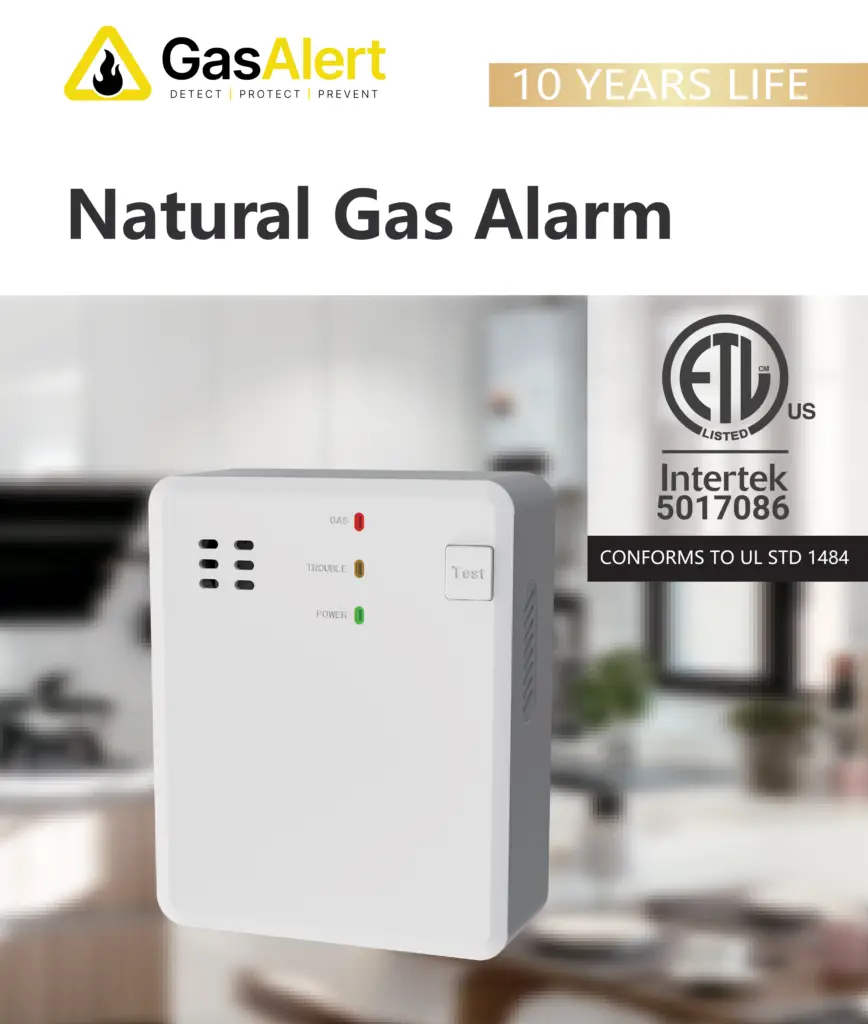
Carries the Intertek ETL Listed mark and conforms to UL 1484, so you can trust it’s been independently tested to recognized safety standards.
An Alarm That Gets Attention
A loud, distinct audible signal designed to wake residents and prompt immediate action.
Clear Visual Signaling
Green, red, and yellow LED indicators make power, alarm, and fault status easy to read at a glance, day or night.
Straightforward Wall Installation
Wall-mounted installation using the included hardware and basic tools (drill and screwdriver), per the supplied instructions.
Dependable Methane Sensing
Purpose-built sensing technology continuously monitors for methane / natural gas and provides audible and visual warning when the alarm threshold is reached.
From Box to Protection in Three Steps
Install
Mount the alarm on the wall using the included hardware, typically within 12 inches of the ceiling and at the specified distance from gas appliances. No mains wiring required.
Detect
The sensor continuously monitors the air for natural gas, working quietly in the background around the clock.
Alert
If gas is detected, a loud alarm and flashing LED immediately notify anyone nearby to act.
Every Detail, Engineered With Intent
Specifications for the GasAlert Natural Gas Alarm, per manufacturer documentation.
Built for Residential Properties Across New York
The GasAlert Local Law 157 gas detector is suitable for applicable residential properties throughout New York City.
Apartment Buildings
Protect every unit across multifamily properties with one consistent, building-wide standard.
Condominiums
Give unit owners and boards a straightforward way to meet resident safety expectations.
Rental Properties
Support tenant safety and reduce liability across your rental portfolio.
Student Housing
Add a layer of protection in high-occupancy housing where awareness can vary.
Senior Living
Help residents who may be slower to notice or respond to a leak.
Mixed-Use Buildings
Cover residential floors above commercial space with reliable, always-on detection.
Awareness Changes Everything
Without GasAlert
- Delayed awareness of leaks
- Elevated risk to residents and property
- Uncertain compliance standing
- Reliance on manual checks and resident reports
With GasAlert
- Early, automatic warning
- Greater peace of mind for owners and residents
- Straightforward wall-mounted installation
- A supporting layer toward Local Law 157 compliance
Straight Answers, No Jargon
What does a natural gas detector actually detect?
The GasAlert GA2008-01 Local Law 157 gas detector is designed to detect methane, the primary component of natural gas. If methane reaches the specified alarm threshold, the unit provides audible and visual warnings to alert occupants.
Is GasAlert a carbon monoxide detector?
No. The GA2008-01 is designed to detect methane / natural gas. It does not detect carbon monoxide, smoke, heat, flames, propane, or any other gas, and it does not replace required carbon monoxide or smoke alarms.
Is methane the same as natural gas?
Methane is the primary component of the natural gas delivered to most residential buildings, which is why detectors are tuned specifically to sense it.
How long does the battery last?
The GasAlert alarm uses a built-in long-life lithium battery designed for approximately 10 years of service, with no routine battery replacement required. At the end of its rated service life, the alarm unit itself should be replaced in accordance with the user instructions.
How often should the detector be tested?
Test the alarm at least once a month using the built-in TEST button, plus a quick visual check during routine unit inspections.
How difficult is installation?
Installation position is important. The GasAlert alarm is designed for wall mounting and must be installed in accordance with the supplied instructions, including the required distance from ceilings, cooking appliances and gas appliances. Installation uses basic tools (drill and screwdriver); no mains electrical connection is required.
What maintenance does it need?
No routine battery replacement is required during the rated service life. Regular testing and basic cleaning should still be carried out in accordance with the user manual — test the alarm at least once a month using the TEST button, and keep the unit free of dust.
When is the Local Law 157 compliance deadline?
The current NYC compliance deadline for required natural gas alarms is January 1, 2027. Local Law 102 of 2025 established this deadline, and NYC DOB subsequently confirmed that the required number of manufacturers of qualifying battery-powered alarms is available.
Does my building need a natural gas alarm?
It depends on your building’s occupancy classification and whether a fuel-gas-burning appliance is present. Requirements apply to covered R-1, R-2 and R-3 residential occupancies, including many apartment buildings, hotels and one- and two-family homes. Where an alarm is required, it must generally be installed in the same room as the gas appliance. Because requirements vary by building type and configuration, owners and managers should review the current NYC DOB and HPD requirements for their specific property.
Does GasAlert meet the required product standard?
The GasAlert GA2008-01 is Intertek ETL Listed and conforms to UL 1484, the product standard referenced by NYC DOB for natural gas alarms. The NYC Department of Buildings does not endorse any manufacturer’s products with regard to gas alarms or gas detection, so GasAlert is not described as “NYC approved,” “city approved,” or “government approved.”
Where does the alarm need to be installed?
Where a natural gas alarm is legally required, NYC DOB rules call for it to be installed in the same room as the gas appliance, at least 3 feet but no more than 10 feet away, measured horizontally. Separately, GasAlert’s own installation instructions specify mounting within 12 inches of the ceiling for best sensor performance. Both the NYC placement rule and the manufacturer’s mounting instructions should be followed together.
What causes false alarms, and how are they minimized?
False alarms are most often caused by improper placement — too close to cooking appliances, in poor-airflow areas, or outside the recommended distance range from gas appliances. Installing the alarm in accordance with the supplied placement instructions helps avoid common causes of false triggers.
What does ETL Listed mean?
The GasAlert GA2008-01 carries the Intertek ETL Listed mark and conforms to UL 1484, the applicable standard referenced for residential gas alarms. This indicates that the product has been independently evaluated against the relevant product safety requirements.
When should a detector be replaced?
Even sealed-battery detectors have a limited sensor lifespan. Plan to replace each unit at the end of its rated service life, indicated on the device and in the included documentation.
Protect Your Building Before It's Too Late
Join property owners across New York taking a proactive step toward resident safety and Local Law 157 readiness. Get a tailored quote for your building in minutes.